How to take care of them
Taking care of guinea pigs (also known as cavies) is a rewarding long-term commitment, as they typically live 5 to 8 years. They are highly social, vocal animals that thrive on routine and companionship.
1. Social Needs & Companionship
Never Keep One Alone: Guinea pigs are herd animals and can become depressed or lonely if housed by themselves. Always keep them in pairs or small groups of the same sex.
Safe Pairings: Ideal matches include two females (sows) or two neutered males (boars). Do not house males and females together unless they are neutered to prevent rapid breeding.
2. Diet & Nutrition
A guinea pig's diet must be high in fiber to maintain their digestive health and wear down their continuously growing teeth.
Unlimited Grass Hay: High-quality Timothy hay or orchard grass should make up about 75-80% of their diet and be available 24/7.
Fresh Vegetables: Provide roughly 1 cup of fresh leafy greens daily. Safe options include Romaine lettuce, bell peppers (high in Vitamin C), and cilantro.
Vitamin C: Unlike most mammals, guinea pigs cannot produce their own Vitamin C. Ensure they receive it through fortified pellets, fresh veggies, or a Vitamin C supplement.
Fresh Water: Provide clean, filtered water daily in a heavy ceramic bowl or a sipper bottle.
3. Habitat & Environment
Spacious Enclosure: A pair of guinea pigs needs a minimum of 7.5 to 10.5 square feet of flat floor space. Standard pet store cages are often too small.
Solid Flooring: Never use wire-bottom cages, as they cause painful foot infections like bumblefoot
.Safe Bedding: Use paper-based bedding (like Carefresh) or washable fleece liners. Avoid cedar or non-kiln-dried pine, which contain toxic oils.
Temperature: Keep them indoors in a draft-free area between 65°F and 75°F. Temperatures over 80°F can quickly lead to fatal heat stroke.
4. Health & Grooming
Nail Trimming: Clip their nails roughly once a month to prevent them from curling into their foot pads.
Brushing: Short-haired breeds need weekly brushing, while long-haired breeds (like Peruvians) require daily grooming to prevent painful matting.
Veterinary Care: Find a vet who specializes in exotic animals or "cavies" for an annual wellness exam.
Daily Cleaning: Spot-clean soiled bedding and uneaten fresh food daily; perform a deep cage scrub weekly.
5. Handling & Enrichment
Proper Lifting: Always use two hands—one under the chest and the other supporting the hindquarters—to prevent spinal injuries.
Floor Time: Allow at least one hour of supervised exercise daily in a "piggy-proofed" area free of electrical cords or small gaps.
Toys: Provide safe chew items like willow sticks or cardboard tunnels to keep them mentally stimulated and their teeth healthy.
Cages
For a healthy guinea pig, the most critical factor is space; most cages sold in pet stores are too small for their well-being. Experts recommend a minimum of 7.5 to 10.5 square feet of flat floor space for a pair of guinea pigs.
Elevating the cage can reduce pet stress by preventing owners from "looming" over them and provides convenient storage for supplies.
Popular Indoor Habitats
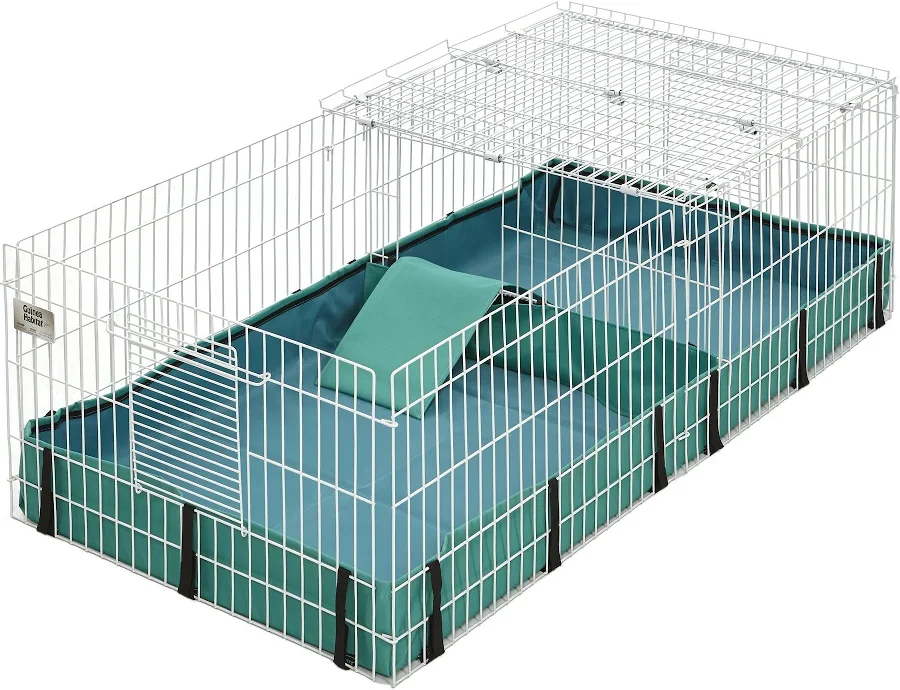
Midwest Guinea Habitat Plus
72.99
Features: Provides 8 square feet of living space with a leak-proof, washable PVC-lined canvas bottom.
Expert Insight: According to Chewy, it is a top choice for single or paired guinea pigs because it includes a dividing panel and ramp to separate play and care areas.,
User Feedback: Reviewers on Petco appreciate the easy assembly but some note it may feel less sturdy than metal-based options.
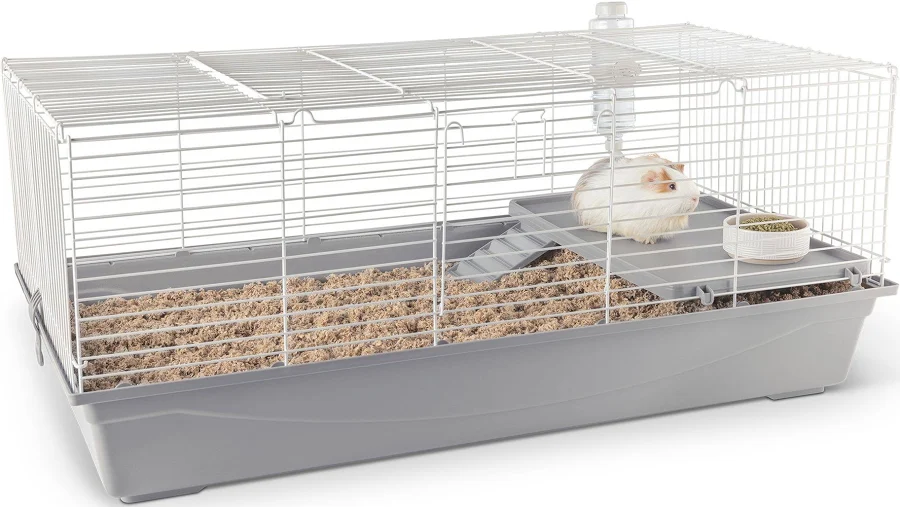
PetSmart Full Cheeks Easy Build Spacious Home
77.99
Features: A large habitat (approx. 47" W x 23" D) featuring dual entry for easier interaction and cleaning.
User Feedback: It has a high average rating of 4.8 stars on PetSmart, with users praising its durability and the inclusion of a ramp and shelf.
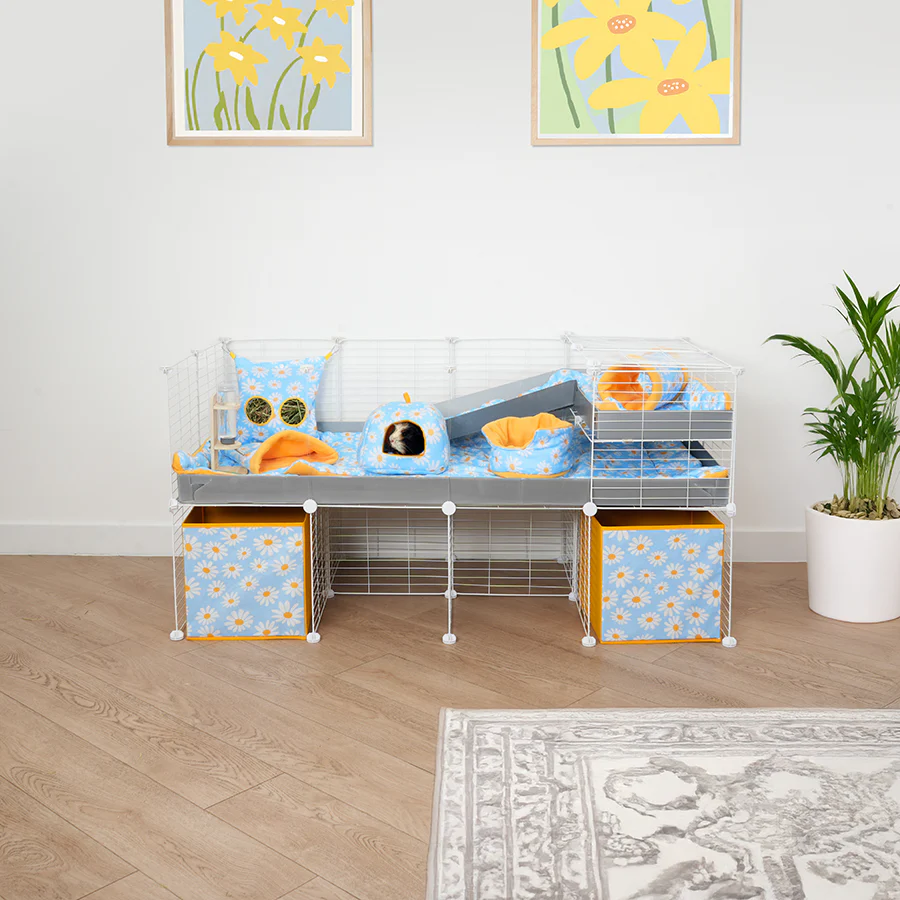
4x2 C&C Guinea Pig Cage with Loft & Stand.
292.80
Space & Size: A larger "C&C" (Cubes and Coroplast) style cage that offers approximately 10.5 square feet on the main level.
Features: Uses a solid coroplast base (corrugated plastic) which is gentle on feet and avoids the risks of wire mesh floors.
User Feedback: Kavee customers appreciate the built-in storage stand and the modular design that allows for easy expansion if more pets are added.
Cages with Stands & Extra Storage
Kavee 4x2 C&C Cage with Loft & Stand
Benefits: Elevates the habitat to waist height and creates under-cage storage for hay and bedding.
Setup: The stand is modular and snaps together in minutes without tools. PawHut Two-Story Small Animal Cage with Stand
Design: Features a removable cage that can be placed on the floor or left on its wheeled stand.
Accessories: Comes with a hay feeder, water bottle, and food dish.
Reviews: Owners on Wayfair appreciate the mobility and built-in storage shelf.
Key Housing RequirementsAvoid Multi-Level Only: Guinea pigs have poor depth perception; while small lofts are okay, they primarily need flat floor space for running.
Safety Barriers: Ensure bar spacing is small (approx. 1 inch) to prevent escapes or injuries. Floor Type: Never use wire-bottom floors, as these cause painful foot injuries like bumblefoot.
| guinea pig cages | |||
|---|---|---|---|
| Number of Guinea Pigs | Minimum Space (Bare Minimum) | Recommended Space (Ideal) | |
| 1-2 Guinea Pigs | 7.5 sq. ft. (approx. 30" x 36") | 10.5 sq. ft. (approx. 30" x 50") | |
| 3 Guinea Pigs | 10.5 sq. ft. | 13 sq. ft. (approx. 30" x 62") | |
| 4 Guinea Pigs | 13 sq. ft. | 16+ sq. ft. | |
Food
A healthy guinea pig diet consists of 80-90% high-quality grass hay, which must be available at all times. Because guinea pigs cannot produce their own Vitamin C, they require daily supplementation through fresh vegetables and fortified pellets to prevent scurvy.
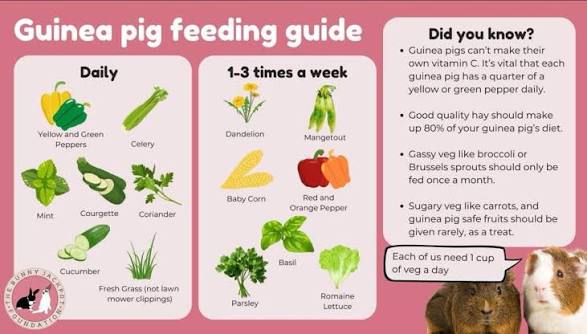
Recommended Food Products
Based on expert guidance and user reviews, the following products are highly rated:
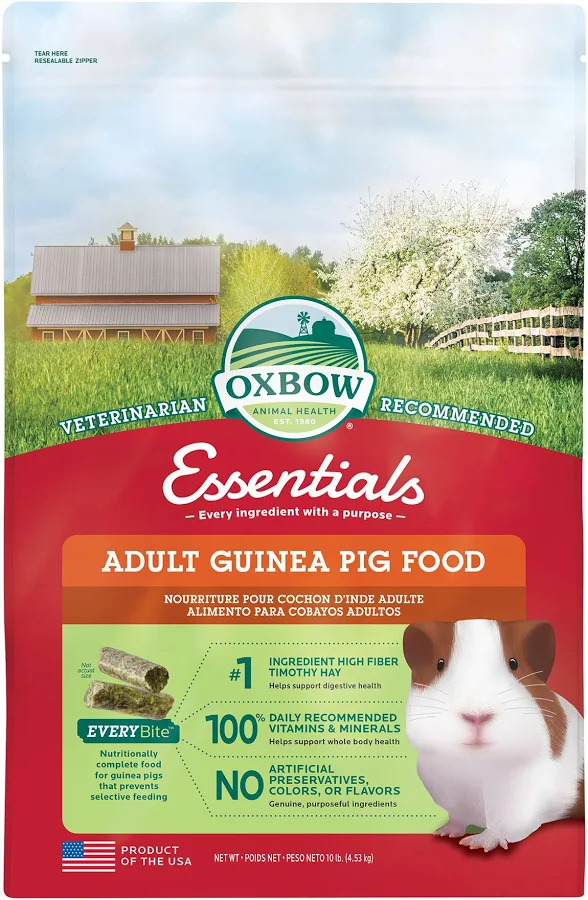
Oxbow Essentials Adult Guinea Pig Food
22.94
Features: Made from high-fiber timothy grass meal and contains stabilized Vitamin C.
Reviews: Highly rated (4.9/5 stars) for quality ingredients and palatability.
Purchasing: Available at PetSmart,, Chewy, and pet Supermarket.
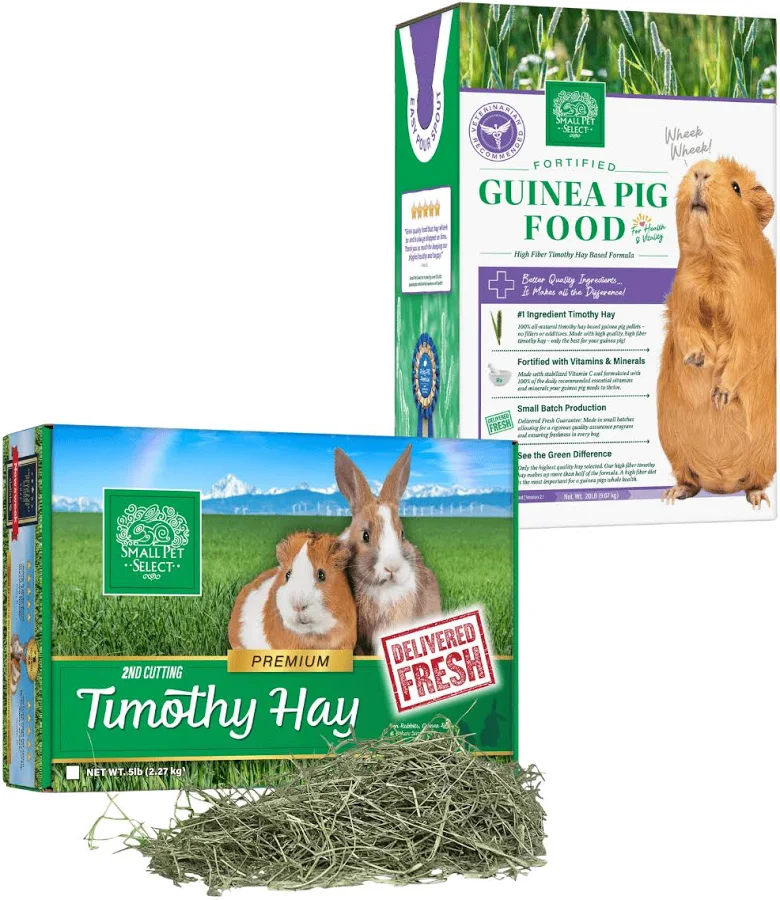
Small Pet Select 2nd Cut Timothy + Guinea Pig Food Pellets
55.99
Features: Includes hand-sorted, soft-textured 2nd cut hay and pellets made in small batches with stabilized Vitamin C.
Reviews: Users from Reddit and merchant sites praise its freshness.
Purchasing: Available directly from Small Pet Select.
Essential Daily Diet Components
Grass Hay: Unlimited access to Timothy, orchard, or meadow hay is critical for digestion and wearing down continuously growing teeth. Alfalfa hay should only be given to young (under 6 months) or pregnant guinea pigs due to its high calcium content.
Fresh Vegetables: Provide 1 cup per day of a variety of greens.
Best Daily Options: Bell peppers (any color, high in Vitamin C), Romaine lettuce, green leaf lettuce, and cilantro.
Limited Options (2-3 times a week): Carrots (high in sugar), broccoli, kale, and spinach (high in calcium, which can cause bladder stones).
Fortified Pellets: Feed approximately 1/8 cup (2 tablespoons) of plain, grass-based pellets daily. Avoid "muesli" mixes containing seeds, nuts, or colorful dried bits, as these are choking hazards and often high in fat and sugar.
Foods to Avoid
Toxic or Dangerous: Potatoes (and skins), onions, garlic, mushrooms, avocado, and rhubarb.
Unhealthy Fillers: Iceberg lettuce (mostly water, no nutrition), seeds, nuts, corn kernels, and dairy products.
Garden Risks: Never feed lawnmower clippings, as they ferment quickly and can cause serious illness.